I Was Wrong About Index Funds Being Boring
I quit stock picking for index funds and underestimated the math. Here's what 8 years of returns, the SPIVA data, and Buffett's bet actually prove.
By Abhijit
Home
I quit stock picking for index funds and underestimated the math. Here's what 8 years of returns, the SPIVA data, and Buffett's bet actually prove.
By Abhijit
Yes, index funds are boring — and that is the entire reason they win. Boring means buying the whole market, holding forever, and letting compounding do the heavy lifting while you do nothing. Over the 20-year window ending 2024, the SPIVA Scorecard shows 92% of actively managed US large-cap funds underperformed the S&P 500. Boring is not a personality defect of the strategy. It is the strategy.
For eight years I picked stocks. I read 10-Ks on Saturdays, ran DCF models in Google Sheets, kept a watchlist of 47 tickers. I beat the index in 2019 and 2021. I got crushed in 2022 and 2023. When I finally ran the spreadsheet end-to-end — fees, taxes, mistakes, the two stocks I refused to sell — I had underperformed the Nifty 50 by 3.1% per year over the full cycle.
That is roughly ₹38 lakh of compounded opportunity cost on a ₹15L portfolio. For a "hobby."
This is my I-Was-Wrong post. Not about whether index funds work — the data settled that decades ago. About why I, like most people who think they are above average at investing, refused to believe boring could outperform interesting.
Warren Buffett's index fund advice is the single most ignored piece of guidance in finance: a low-cost S&P 500 index fund will outperform almost every professional investor you can hire. He has repeated it in roughly every Berkshire Hathaway annual letter since 2013.
In his 2013 letter to shareholders, Buffett wrote that the cash he leaves for his wife should go into a Vanguard S&P 500 fund (90%) and short-term Treasuries (10%). Not Berkshire stock. Not a hedge fund. An index fund.
In 2007 Buffett wagered $1 million that an S&P 500 index fund would beat any basket of five hedge funds picked by Protégé Partners over ten years. He won by a margin nobody pretends to argue with: the index fund returned 7.1% annually, the hedge fund basket returned 2.2%. The wager is now a Berkshire Hathaway index fund opinion that doubles as a permanent case study.
The Boring Wins Framework: A strategy outperforms when it minimizes the three compounding leaks — fees, taxes, and behavioral mistakes — and accepts average market returns as the upside. Index funds are the only widely available product designed to lose on all three leaks by less than anything else.
I am coining the framework because every "why index funds work" article I read explained the what and skipped the why. The why is the three leaks. Hold that idea — it returns in every section below.
Index funds are boring by design: they buy a pre-defined slice of the market, never trade on a view, and charge near-zero fees because nobody is sitting in a corner office picking stocks. That absence of human judgment is the feature, not the bug.
A passive investing strategy works because the market's long-run drift is positive and human discretion mostly subtracts from it. The S&P 500 has returned roughly 10% nominal annually since 1928 — without anyone "managing" it.
The index fund autopilot is mechanical. Every month money goes in, the fund buys the basket at whatever price it is trading at, and you do not look at it. That is the entire user manual.
Most low maintenance investments fail because "low maintenance" usually means "low return." Index funds are the rare exception: low effort, market-rate return, near-zero fee drag. The boring investing strategy that works is boring precisely because every active alternative bleeds you on at least one of the three leaks.
Index funds are not safe. They are diversified — which is a very different word. You can absolutely lose money in index funds; the S&P 500 has had 13 drawdowns of more than 20% since 1928. What index funds protect you from is single-point failure: a fraud, a delisting, a CEO scandal that wipes out one position.
Yes — and ignoring that fact is how people panic-sell at the bottom and convert a temporary drawdown into a permanent loss. The index fund crash history shows every major decline was eventually recovered, but "eventually" has meant up to 13 years (1929–1942) and 7 years (2000–2007) in the worst cases.
The diversification of index funds removes idiosyncratic risk, not systemic risk. Worst case scenario index funds: a multi-decade flat real return, like Japan's Nikkei 225 from 1989 to 2024. It is unlikely. It is not impossible.
The SPIVA Scorecard — published twice a year by S&P Dow Jones Indices — settles the index funds vs stock picking returns debate using actual fund data, not survivor-biased anecdotes. As of mid-2024, 88% of US large-cap active funds underperformed the S&P 500 over 15 years; 92% underperformed over 20 years.
The percentage of fund managers that beat the market is not zero. It is just smaller than the percentage who got lucky enough to look like they did before reverting.
That is roughly a 2% annual headwind before the manager has picked a single stock. Beating the market by 2% per year, consistently, is a thing roughly a dozen humans in history have done. The active vs passive investing performance gap is not a mystery. It is arithmetic.
Yes, for a while. The hard problem is doing it for a long enough while that compounding actually rewards you. The SPIVA report explained simply: the longer the horizon, the smaller the percentage of survivors. At 20 years, it is essentially indistinguishable from random.
This is the "why I stopped picking stocks" moment. Not because I was bad at it — I was actually fine. Because being fine at it costs 2–3% a year vs. doing nothing.
For most investors in 2026, the index funds vs ETFs decision matters less than the index-vs-active decision — but the structural differences are real, and the right answer depends on your account type and country.
In the US, ETFs win on tax efficiency because of the in-kind creation/redemption mechanism — they almost never distribute capital gains. In India, the structural advantage largely disappears because both vehicles are taxed at the point of sale. Which is better ETF or index fund for beginners depends almost entirely on whether you want to automate monthly contributions (mutual fund SIP) or buy in lumps (ETF).
Examples worth knowing: index ETF examples in the US are VOO, VTI, SPY, IVV; in India, Nifty BeES and SBI Nifty 50 ETF.
The best index funds for beginners 2026 are the ones with the lowest expense ratio, the broadest market coverage, and the lowest friction to buy automatically every month. That short list has not changed materially in a decade — and that is itself the point.
VTI (Vanguard Total Stock Market) holds ~3,700 US stocks. VOO (Vanguard S&P 500) holds 500. Both charge 0.03%. Over 20 years their returns differ by less than 0.3% annually. The "right" answer is: pick one and stop reading comparison threads.
Same fund, different wrapper. VTSAX is the mutual fund share class of the total stock market index fund. VTI is the ETF share class. Pick VTSAX if you want fractional auto-investing. Pick VTI if you are buying via a broker that does not offer Vanguard mutual funds (which is most of them outside Vanguard itself).
Fidelity zero fee index funds (FZROX, FNILX, FZIPX) are genuinely 0.00% expense ratio — the catch is they are only available inside Fidelity accounts and use proprietary indices. Schwab index funds (SWTSX, SWPPX) are the closest non-Vanguard equivalents for everyone else.
The classic three fund portfolio: US total market + international total market + total bond. Coined by John Bogle and popularized by the Bogleheads community. The total stock market index fund is the anchor; the other two control your risk and geographic exposure.
A reasonable 2026 starting allocation for a 30-year-old:
That is the entire portfolio. There is no step 4.
Should I Invest in Index Funds in My 20s?
Yes. Investing in your 20s index funds is mathematically the highest-leverage financial decision you will ever make, because compound interest in your 20s does roughly twice the work of compound interest in your 30s. The first decade of contributions accounts for more terminal wealth than the next two combined.
A $200/month contribution started at age 22 vs. age 32, both held until age 60 at the S&P 500's 10% long-run average return:
That is not a typo. The decade you spend deciding whether to start is the most expensive decade in the entire timeline.
For someone in their 20s with a 30+ year horizon, the case for the best investments for young adults being index funds is brutally simple: maximum equity exposure, minimum fees, automated contributions, no emotional override. Real estate ties up liquidity and concentrates risk in one zip code; crypto adds volatility without a positive long-run expected return; individual stocks add idiosyncratic risk you do not need.
The Gridpulse Brief — Get one calibrated take per week on what global market shifts mean for Indian investors specifically — Fed moves, AI capex cycles, SIP strategy, and the math behind the headline. → Subscribe here
I started picking stocks because index funds felt like giving up. Like admitting I was not smart enough to beat the market. It took eight years and a spreadsheet to learn that "beating the market" is not the goal — keeping the market's return, after fees and taxes and my own bad decisions, is. The Boring Wins Framework is just a name for the realization that the three leaks compound against you whether you notice them or not.
The next decade of Indian investing will look a lot like the last three decades of US investing: active management gets cheaper, indices get harder to beat, and the people who started early in low-cost index funds at 25 quietly become the people with options at 45. The interesting investors will keep being interesting. The boring ones will keep being rich.
If you are still picking stocks at 30, ask yourself the question I should have asked at 23: are you doing it because the math says you should, or because the boring answer feels like an insult to your intelligence?
Early research on AI and cognition suggests offloading to chatbots can weaken recall, persistence, and problem-solving. One MIT study found essay writers using gen AI performed worse over time.

Xbox loses 64 cents on every dollar and just cut 3,200 jobs. Here's why even the biggest game launch in history can't fix gaming's broken economics.

Google's Gemini Omni Flash generates and edits video in conversation at $0.10/second. Here's what the API actually delivers — and where 720p hits a wall.
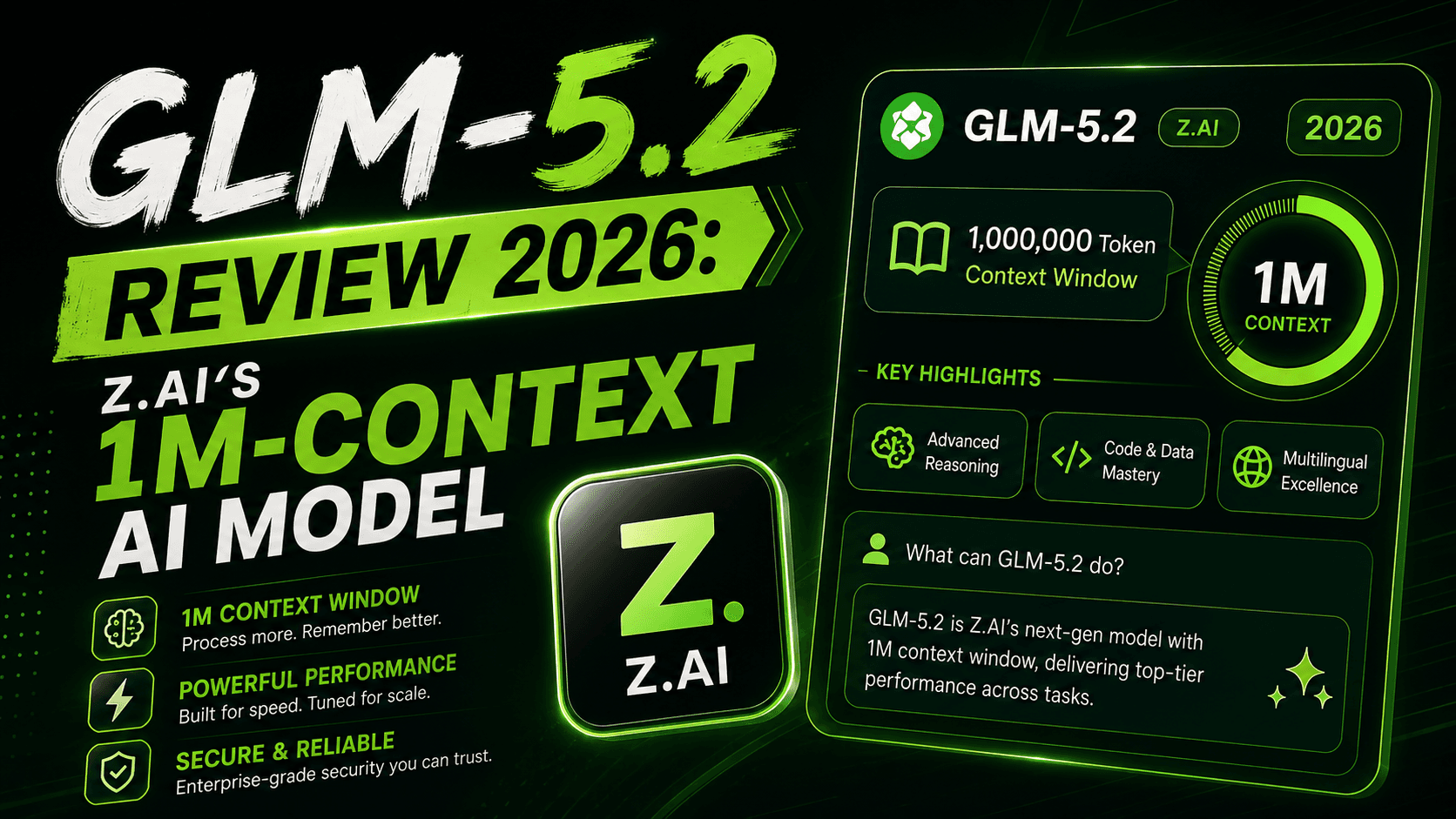
Z.ai shipped GLM-5.2 with a 1M-token context window and zero benchmarks. Here's what's confirmed, what's hype, and whether to switch today.
Anthropic's 11 Cowork plugins erased a real margin pool overnight. The mechanism, the casualty list, and what it does to Indian IT services next.

Two free skills, one reference folder, and the exact prompts I used to ship a $10K-tier animated portfolio in Claude Code. No agency, no boilerplate.
Get weekly curations of the best articles, resources, and insights directly to your inbox about AI, Tech, Finance & Business.