Why I Cut My AI Stack From 14 Tools to 6 in 2026
I was paying for 14 AI tools in 2025. My 2026 stack runs on 6 — and ships more. Here's the Single-Job framework I used to cut the rest.
By Abhijit
Home
I was paying for 14 AI tools in 2025. My 2026 stack runs on 6 — and ships more. Here's the Single-Job framework I used to cut the rest.
By Abhijit
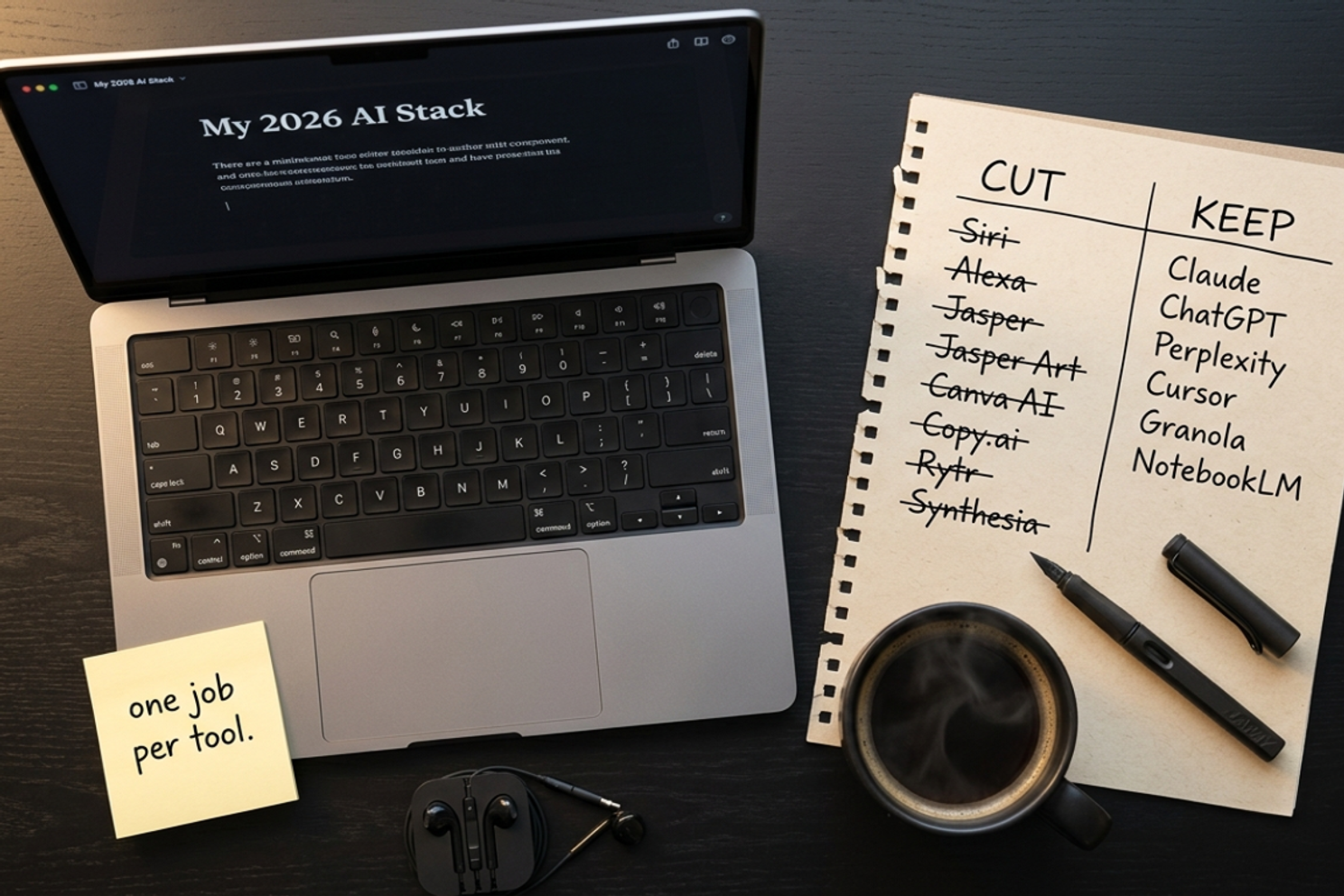
I was paying ₹11,400 a month for 14 AI tools in late 2025. My stack today runs on 6 tools and ships more work. The difference was not better tools — it was the discipline to enforce one rule. Every tool in the stack must do exactly one job better than the next-best alternative. Everything else got cut, including subscriptions I had defended for months.
That rule is what I'm calling the Single-Job Stack. It is the only AI workflow framework I have found that survives contact with a 12-month renewal cycle.
By December 2025, my stack looked like every other "AI power user" thread on X. I had ChatGPT Plus, Claude Pro, Perplexity Pro, Gemini Advanced, three coding assistants, two meeting transcribers, a note synthesizer, an image generator, a video tool, two writing-specific wrappers, and a "second-brain" agent I used maybe twice a week.
The total spend wasn't the real problem. The cognitive tax of switching was.
I tracked it for two weeks. Every "let me try this in [other tool]" loop cost 4–11 minutes of context recovery. Across a workday, that compounded into roughly 90 minutes of pure switching loss. The tools were fast. I was slow.
Single-Job Stack: A consolidated AI workflow in which every retained tool is the demonstrably best option for one — and only one — clearly defined task, measured by output quality per minute and per dollar.
The framework rejects the "all-in-one" suite premise that now dominates 2026 product marketing. ChatGPT writes, codes, researches, transcribes, and generates images. Claude does the same. So does Gemini. The temptation is to pick one suite and consolidate around it.
That consolidation is a trap. Generalist suites are competent at everything and excellent at nothing. The Single-Job Stack picks the best-in-class tool for each job and accepts the friction of switching only when the upgrade per task is real.
The audit is brutal. Every tool answers two questions: What is the one job this owns? and What gets measurably worse if I cut it? If the answer to either is fuzzy, the subscription gets cancelled before the next renewal.
Total: $98/month, down from $140. The real win is not the $42 saved — it is the 90 minutes a day I am no longer burning on tool roulette
I built the workflow around three modes, not around tools. The tool follows the job, never the other way around.
Perplexity Pro handles every "what is the current state of X" query. I never ask Claude or ChatGPT a question that requires fresh data — both hallucinate citations under pressure, and Perplexity's source list is the only reliable hedge.
NotebookLM eats the longer outputs. I drop 4–8 source URLs into a notebook, generate the audio brief, and listen on my next walk. The synthesis is rougher than Claude's, but it is grounded in the actual sources I loaded.
Every long-form piece — including this one — starts in Claude Opus 4.7. The reasoning depth on a 3,000-word argument is the single capability I have not been able to replicate in any other tool. I draft, push back, iterate inside one conversation; project memory means I never re-explain my voice.
Cursor takes over the moment I touch code. I do not write code in Claude.app or ChatGPT anymore — the lack of file context makes both 3–4× slower than an in-editor agent that can read the whole repo.
ChatGPT voice mode is the only tool I open on a walk. I dictate ideas, work through arguments out loud, and have it summarize back into Notion. The voice latency under GPT-5 is the first version of this workflow that feels like talking to a person.
Granola sits in every meeting. I have not opened a transcription tool in four months — its decision-focused summaries replaced the 40 minutes I used to spend cleaning up Fireflies output.
The Gridpulse Brief — Every Tuesday, I send a 5-minute breakdown of the AI tool, workflow, or framework I tested that week — including the ones I cut. Join readers who run leaner AI stacks. → Subscribe here
The 6-tool stack is not stable — it is a snapshot. By Q3 2026, Claude's voice mode will either match GPT-5's, or ChatGPT's reasoning will catch Opus, and one of those subscriptions disappears. NotebookLM is already nibbling at Perplexity's job. The Single-Job Stack only works when the audit runs quarterly.
If your stack has grown without that audit, you are not running a workflow — you are running a subscription portfolio. The next renewal cycle is the cheapest moment to fix it.

Early research on AI and cognition suggests offloading to chatbots can weaken recall, persistence, and problem-solving. One MIT study found essay writers using gen AI performed worse over time.

Xbox loses 64 cents on every dollar and just cut 3,200 jobs. Here's why even the biggest game launch in history can't fix gaming's broken economics.

Google's Gemini Omni Flash generates and edits video in conversation at $0.10/second. Here's what the API actually delivers — and where 720p hits a wall.
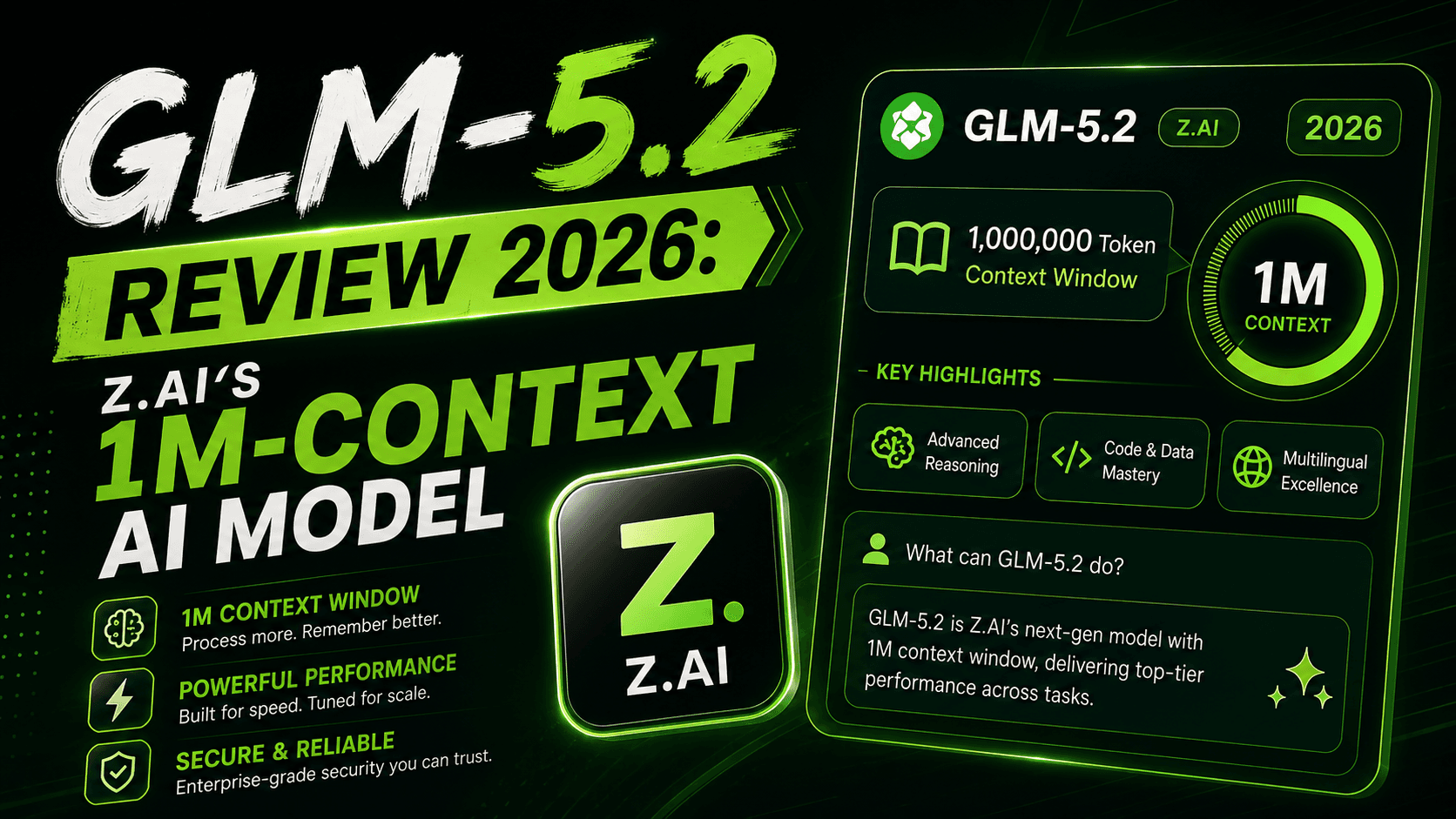
Z.ai shipped GLM-5.2 with a 1M-token context window and zero benchmarks. Here's what's confirmed, what's hype, and whether to switch today.
Anthropic's 11 Cowork plugins erased a real margin pool overnight. The mechanism, the casualty list, and what it does to Indian IT services next.
Two free skills, one reference folder, and the exact prompts I used to ship a $10K-tier animated portfolio in Claude Code. No agency, no boilerplate.
Get weekly curations of the best articles, resources, and insights directly to your inbox about AI, Tech, Finance & Business.