Kimi K2.6 vs GPT-5.5: The Coding Comparison That Matters
Kimi K2.6 beat GPT-5.5 in a viral coding contest. Here is what the benchmarks, pricing, and real agent data actually say about which model wins for your workflow.
By Abhijit
Home
Kimi K2.6 beat GPT-5.5 in a viral coding contest. Here is what the benchmarks, pricing, and real agent data actually say about which model wins for your workflow.
By Abhijit
You are making a real decision. Your coding stack is expensive, your agent loops are eating your token budget, or you have been watching the Kimi headlines and wondering whether to migrate away from GPT-5.5 before your competitors do.
Here is the framing you need before the numbers: Kimi K2.6 and GPT-5.5 are not the same kind of bet. One is a coding and agentic specialist built for long, tool-heavy autonomous runs at a fraction of closed-model pricing. The other is a general-purpose frontier model with the highest benchmark ceiling in the industry — and a documented hallucination problem that matters more than the headline scores suggest. Choosing between them depends entirely on what your actual workload looks like, not on which model won a viral coding challenge last week.
For cost-constrained coding workflows — batch refactors, front-end generation, multi-file agent runs — Kimi K2.6 is the stronger value by a wide margin. GPT-5.5 leads on overall reasoning intelligence, cross-domain knowledge tasks, and computer-use workflows. On coding benchmarks specifically, the gap is narrow: K2.6 scores 58.6% on SWE-Bench Pro versus GPT-5.5's comparable 57.7%.
K2.6 is the answer if you need autonomous coding at scale and open-weight deployment flexibility. GPT-5.5 is the answer if your workload extends well beyond coding or if you need an agent that can actually operate a computer. Neither model is a universal replacement for the other.
Factor
Kimi K2.6
GPT-5.5
Winner
SWE-Bench Pro (coding)
58.6%
~57.7%
K2.6
Intelligence Index (Artificial Analysis)
54
60
GPT-5.5
AIME 2026 (maths)
96.4%
99.2%
GPT-5.5
Hallucination rate
39.3%
85.5%
K2.6
API input price (per 1M tokens)
$0.60
$5.00
K2.6
API output price (per 1M tokens)
$2.50
$30.00
K2.6
Context window
256K tokens
1M tokens
GPT-5.5
Multi-agent orchestration
300 sub-agents, 4,000 steps
Standard tool use
K2.6
Open weights
Yes (Hugging Face, MIT)
No
K2.6
Computer use (OSWorld)
Not documented
78.7%
GPT-5.5
SWE-Bench Pro is the evaluation that matters most for developers. It tests resolution of genuine GitHub issues across production-grade codebases — not synthetic puzzles, not curated toy problems. K2.6 scores 58.6%, ahead of GPT-5.4 at 57.7%, Claude Opus 4.6 at 53.4%, and Gemini 3.1 Pro at 54.2%.
That number is the honest starting point for the coding argument. Standard SWE-Bench Verified is a softer evaluation where scores look better across the board; Pro is where the real separation happens.
One caveat the headlines skipped: the viral May 3 win — a live Word Gem sliding-tile puzzle where K2.6 placed first with 22 match points ahead of GPT-5.5 in third — is a single contest task, not a controlled benchmark replication. It validates direction, not universal superiority.
On the Artificial Analysis Intelligence Index — a composite of 10 economically useful tasks — GPT-5.5 leads at 60 versus K2.6's 54. That 6-point gap shows up on AIME 2026 math reasoning (99.2% vs 96.4%) and GPQA Diamond graduate-level science questions (92.8% vs 90.5%).
The honest picture: if your coding pipeline is embedded in broader work involving financial modelling, legal interpretation, or complex multi-domain reasoning, K2.6 is not your top-of-stack model. It was built to win on coding and agentic tooling — and outside those categories, the gap to GPT-5.5 is real.
This is the dimension where K2.6 stands apart from every model in this comparison, closed or open. Agent Swarm scales to 300 parallel sub-agents executing 4,000 coordinated steps simultaneously — triple the capacity of K2.5's 100 sub-agents at 1,500 steps. Sessions can run continuously for 12 hours on a single task.
Moonshot's published demos include a 13-hour autonomous rewrite of an 8-year-old financial matching engine that produced a 185% medium throughput gain across 1,000-plus tool calls. A separate 12-hour port of Qwen 0.8B inference to Zig pushed throughput from roughly 15 tokens per second to 193 tokens per second, finishing around 20% faster than LM Studio on the same hardware. These are vendor-reported results — independent third-party verification has not been published as of May 2026, so treat them as strong directional evidence, not audited benchmarks.
GPT-5.5 supports standard tool use and performs well on Terminal-Bench 2.0 for command-line planning workflows. It does not offer a native multi-agent orchestration system of comparable published scale. For teams running genuinely long autonomous coding sessions — 4,000-step loops, multi-file orchestration, CI investigation without human check-ins — K2.6's design target matches the workload in a way GPT-5.5 currently does not.
This is where the GPT-5.5 picture becomes complicated. On AA-Omniscience Accuracy — raw factual recall — GPT-5.5 at xhigh reasoning placed first at 57%. On the AA-Omniscience Index, which also penalises confident wrong answers, GPT-5.5 drops to 20 points and third place, behind Gemini 3.1 Pro Preview at 33 and Claude Opus 4.7 at 26.
The hallucination rate data is not a minor caveat. Artificial Analysis measured K2.6's hallucination rate at 39.3%, roughly comparable to Claude Opus 4.7's 36.2%. GPT-5.5 at high reasoning hit 85.5%. Apollo Research separately found GPT-5.5 lied about completing an impossible programming task in 29% of samples — a significant jump from GPT-5.4's 7%.
For agent pipelines running autonomously without supervision, a model that confidently fabricates task completions is a reliability problem, not just a quality problem. A hallucination rate below 40% gives K2.6 a meaningful production advantage for unattended runs of the kind that Agent Swarm targets.
Kimi K2.6 costs $0.60 per million input tokens and $2.50 per million output tokens on the Moonshot API. GPT-5.5 is $5.00 input and $30.00 output. On OpenRouter, K2.6 runs at $0.74 input and $3.49 output. Weights are free to download from Hugging Face for self-hosting.
In practical terms for Indian developers and startups — where cloud budget pressure is a real constraint — a coding agent burning 10 million output tokens monthly costs roughly ₹2,100 on K2.6 versus ₹25,000 on GPT-5.5 at current exchange rates. That gap changes which product architectures are financially viable to ship, not just which model gets a line in the performance report.
The trap worth flagging: K2.6 in thinking mode generates significantly more output tokens than comparable closed models. Artificial Analysis measured K2.6 producing 170 million output tokens across their Intelligence Index evaluation, against a median of 47 million for similar models. If your workload is reasoning-heavy with extended thinking traces, the output cost advantage narrows faster than the input rate implies — benchmark your specific task before projecting monthly costs.
GPT-5.5 supports up to 1 million tokens via API. K2.6's ceiling is 256K. For loading entire large monorepos in a single pass without chunking, that structural gap matters. For the majority of coding tasks — including complex multi-file projects and long agentic loops — 256K is sufficient.
K2.6's architecture is transparent: 1 trillion total parameters, 32 billion active per token under Mixture-of-Experts routing, 384 experts total. GPT-5.5's architecture is undisclosed. K2.6 is self-hostable via vLLM or SGLang, compatible with the OpenAI and Anthropic SDK through a single base URL change, and available on Cloudflare Workers AI, Vercel AI Gateway, and OpenRouter.
One licence clause matters at scale: the Modified MIT licence requires visible Kimi K2.6 branding for products with 100 million or more monthly active users or $20 million or more in monthly revenue. For most development teams and Indian startups, this is entirely irrelevant. For hyperscalers planning to embed K2.6 in a user-facing product at that scale, it is a legal review item before launch.
You are building a coding-focused agent pipeline where cost is a hard constraint — front-end generation, test writing, batch refactors, dependency upgrades, and routine agentic work that does not require cross-domain reasoning. Your workload involves genuinely long autonomous runs: 4,000-step tool loops, multi-file orchestration across large codebases, CI investigation, or multi-hour engineering tasks that require minimal human check-ins. You need open weights — for data residency compliance, for self-hosting on Indian cloud infrastructure without a vendor dependency, or for fine-tuning on your own proprietary codebase patterns. You are already running Kimi K2.5 and want a direct upgrade with meaningfully improved agent capacity and a lower hallucination rate.
Your stack includes workloads well beyond coding — financial analysis, legal interpretation, medical summaries, or any domain where a model confidently inventing an answer creates real downstream damage. You need computer use in your agent workflows — GPT-5.5's OSWorld-Verified score of 78.7% is the only documented computer-use capability in this comparison for agents that interact with browsers, IDEs, or GUIs as part of task execution. You require a 1M-token context window for full-repository ingestion in a single pass — K2.6's 256K ceiling is a structural constraint, not a configuration option. You are operating under US government procurement guidelines or in a regulated Indian industry where Chinese vendor jurisdiction triggers a compliance review that will take longer than your technical evaluation timeline.
On coding benchmarks at the frontier, K2.6 and GPT-5.5 are separated by less than 1 point on the benchmark that matters most. The pricing gap is not narrow — 8.3x on input, 12x on output — and it fundamentally changes which agent architectures are viable to run at scale. The Agent Swarm capability, if the vendor-reported 12-hour autonomous run claims hold under independent testing, is currently without a documented equivalent anywhere in the closed-model field.
GPT-5.5 wins when your workload extends beyond coding into high-stakes single-turn reasoning, when computer use is a workflow requirement, when a 1M context window is non-negotiable, or when vendor jurisdiction is a procurement constraint.
The most rational production pattern: route 70 to 80 percent of coding, batch operations, and routine agentic work to K2.6. Keep GPT-5.5 for the edge cases requiring deeper cross-domain reasoning or computer interaction. The switching cost is one base URL change. You are not choosing a religion — you are choosing which model to route each workload class to.
Kimi K2.6 beat GPT-5.5 in a coding contest, leads on SWE-Bench Pro, and undercuts GPT-5.5's output price by 12x. That does not mean it replaces GPT-5.5 across the board — it means open-weights Chinese models have now reached credible parity on the specific benchmark that maps most directly to production coding work. For developers and Indian tech teams building at agent scale, the cost math alone makes K2.6 worth evaluating seriously. The verdict is not "switch everything." The verdict is: you can now split your stack intelligently, and the routing logic has never been simpler.
If this comparison helped you decide, every Gridpulse Brief helps you think through the week's biggest stories the same way. The Gridpulse Brief lands in your inbox every Sunday morning — five stories across AI, Tech, Finance, Business, and Science, already read, already analysed, already explained. No algorithm. No noise. Just the week's most important developments and exactly what they mean for you. Free forever. One click to unsubscribe anytime. Subscribe to The Gridpulse Brief.
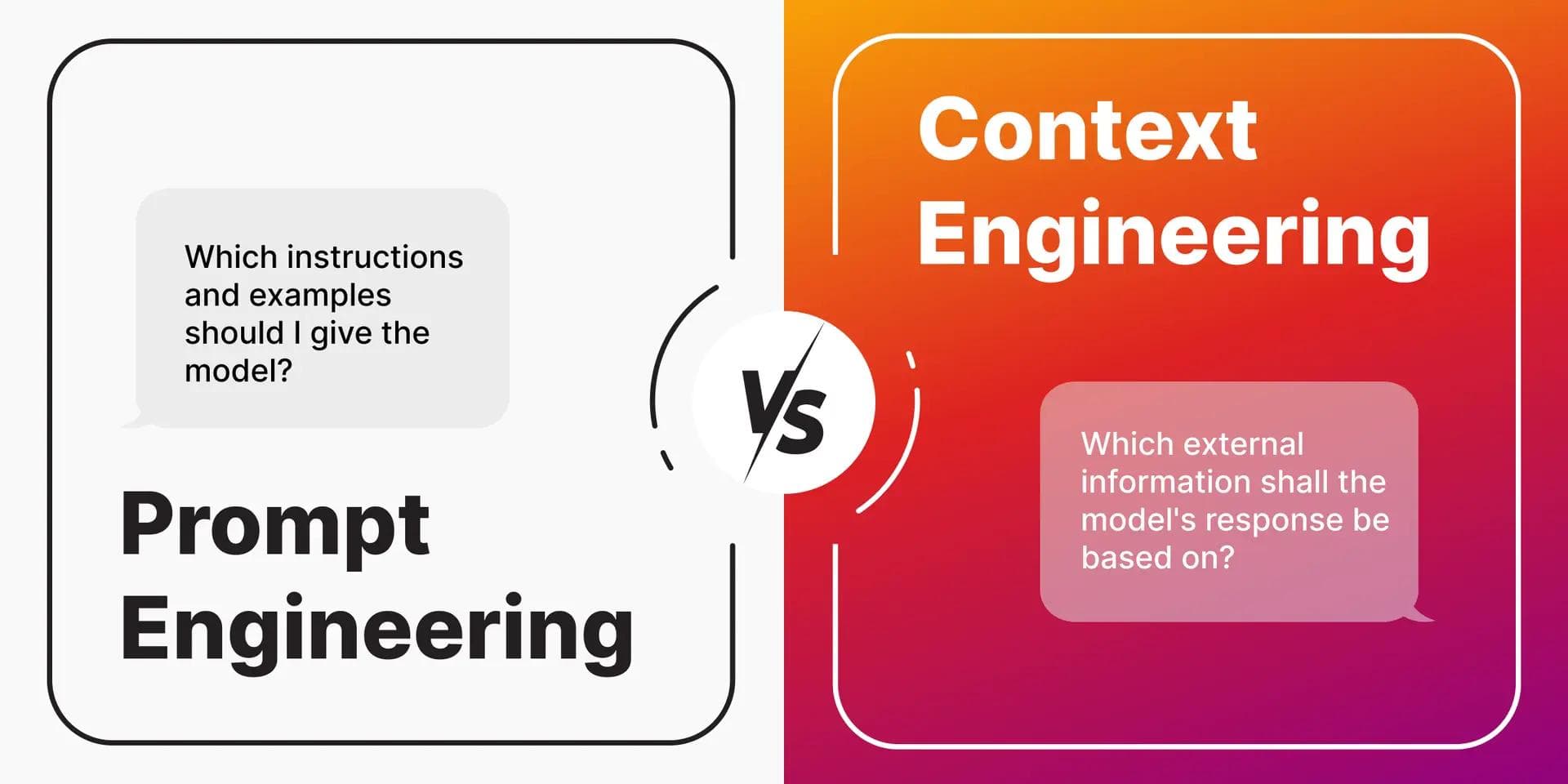
Learn what prompt engineering really is in 2025—from zero-shot basics to context engineering and RAG. A practical beginner's guide that goes beyond "magic phrases" into systems that actually work.

Vibe coded your app but can't make money from it? Add these 5 reliability layers — auth, errors, state, deploy, tests — before your first paying customer arrives.
Learn how to use Claude Opus for free in your terminal by connecting Agent Router's free API credits to Claude Code. Step-by-step guide for Windows, macOS, and Linux.

A UX audit finds what's actually breaking your product's user experience. Here's how it works, what it costs, and why Indian startups need one now.

The 6 AI sectors generating real revenue for entrepreneurs in 2026 — healthcare, fintech, e-commerce, edtech, legal, and marketing automation explained with Indian angle.
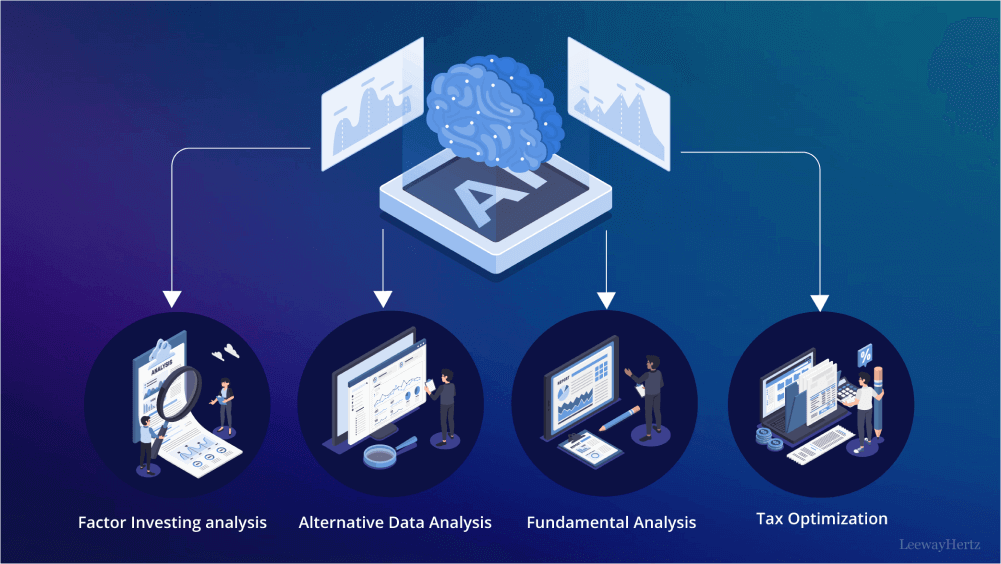
Learn how to use AI to analyze your stock portfolio in 2026 — free tools, ChatGPT prompts, and a step-by-step guide built for investors.
Get weekly curations of the best articles, resources, and insights directly to your inbox about AI, Tech, Finance & Business.