Your Vibe Coded App Won't Make Money Without These 5 Fixes
Vibe coded your app but can't make money from it? Add these 5 reliability layers — auth, errors, state, deploy, tests — before your first paying customer arrives.
By Abhijit
Home
Vibe coded your app but can't make money from it? Add these 5 reliability layers — auth, errors, state, deploy, tests — before your first paying customer arrives.
By Abhijit
Most vibe coders I come across are confused about the same thing: why the demo worked flawlessly but real users broke it within the first hour.
That confusion is expensive. It costs you early customers, early revenue, and the kind of credibility that is nearly impossible to rebuild once someone pays you, hits a bug, and asks for a refund.
Here is my position: vibe coding gets you to a prototype. It does not get you to a product. And the gap between those two things has a name — reliability.
I have watched the vibe coding wave closely enough to see the pattern repeat itself. Tools like Lovable, Bolt.new, Cursor, and Replit have genuinely changed who can build software. A founder with no coding background can now go from idea to working app in a weekend.
But "working" is doing a lot of heavy lifting in that sentence. Working for whom? The creator, demoing on a stable machine, using a pre-set login, with five test records in the database? That is not a product. That is a proof of concept wearing product's clothes.
The moment real users arrive — different devices, edge cases you never anticipated, actual payment attempts — the cracks appear immediately. And at that point, you are not dealing with a technical problem. You are dealing with a trust problem.
Gartner estimates that 75% of new apps will be built using low-code or no-code tools by 2026. The number of vibe-coded prototypes heading toward monetisation has never been higher, which means the number of founders about to make this exact mistake has also never been higher.
And yet the conversion rate from prototype to paying product remains brutal. Most vibe coded apps break at the same four points: authentication that looks functional but is not, errors that crash the experience with no recovery path, state that becomes unreliable after the fourth user action, and deployments that push broken code to production without anyone noticing.
These are not edge cases. They are the default outcome when a prototype encounters real users without a reliability pass.
Look at what happened across the broader AI app wave of 2024 and 2025. Hundreds of AI wrapper apps launched on Product Hunt, caught genuine user interest, and collapsed within weeks — not because the idea was flawed, but because the infrastructure was not built to survive paying customers. One silent auth bug is all it takes. One unhandled error in a checkout flow wipes out a week of trial conversions.
The pattern in indie hacker communities tells the same story. The gap between "people are using my free tier" and "people are paying me consistently" is almost always a reliability problem pretending to be a marketing problem.
Here is the objection I hear most: "My app is a simple tool — it does not need enterprise-grade engineering."
That is a fair point. And it is also exactly the wrong way to frame the problem.
Nobody is suggesting you build like a Series B company with a 40-person engineering team. That would defeat the entire purpose of vibe coding.
The five reliability layers I am talking about are not about over-engineering. They are about minimum viable trust — the floor below which no paying customer will stay.
Authentication that fails silently does not need enterprise infrastructure to fix. It needs one correct implementation pasted into your AI coding tool once. Error handling that shows users a helpful message instead of a white screen does not require a dedicated DevOps team. It requires a single system prompt addition. State tracking, deployment verification, and a basic smoke test ladder follow the same logic.
Each of these layers is a 30-minute addition that changes the user experience from "broken" to "trustworthy."
I have watched founders in Bangalore and Mumbai launch polished-looking apps on Lovable and Replit, spend real money on ads, and watch their conversion rate sit at zero — because the signup flow had a silent authentication failure that nobody caught until it had cost them ₹15,000 in acquisition spend and 200 lost signups. That is not a marketing problem. That is a reliability problem that was entirely solvable before a single rupee went into growth.
The evidence still supports the position. Speed of building is now table stakes. Reliability is the actual differentiator — and it is the one thing most vibe coders skip entirely.
If you have a working prototype and you are planning to charge for it, do not move the launch date up. Move the reliability date up first.
Start with authentication. Not the login screen — the actual auth boundary. Ask your AI tool to implement proper session validation, role-based access control, and token expiry handling. Test it yourself by attempting to access protected routes after logging out. If it holds, move on.
Next, error handling. Every unhandled exception is a user you may never recover. Instruct your AI tool to wrap critical flows — signup, payment, core feature actions — with error states that tell the user what happened and what to do next. Log those errors somewhere visible to you.
Then state management. Every order, job, or transaction your app handles needs a trackable status in a database field — not just in memory. "Pending," "processing," "complete," "failed." This alone eliminates the most common support ticket your paying users will send you.
Deployment verification is next. Pushing code is not the same as deploying correctly. Build a checklist: does the environment variable exist in production? Did the database migration run? Are the routes responding as expected? Run it every single time until you have seen it fail — because it will.
Finally, a basic test ladder. You do not need 100% test coverage. You need three things: a smoke test that confirms your app loads, an API test that confirms your core flow works end to end, and a payment test that confirms money can actually change hands. If all three pass, you can ship with confidence.
Vibe coding changed who can build. Reliability determines who can sell.
You can argue that your tool is simple, that your early users are forgiving, that you will fix things as you go. Some of that will be true — until the moment someone pays you, and then it will not be true at all. Paying customers operate at a different standard than curious users on a free tier, and the moment you charge someone, you have made a commitment that a broken auth flow does not honour.
Add the five layers. Then launch. In that order.
If this take made you think, there is a new one in your inbox every Sunday.
The Gridpulse Brief lands in your inbox every Sunday morning — five stories across AI, Tech, Finance, Business, and Science, already read, already analysed, already explained. No algorithm. No noise. Just the week's most important developments and exactly what they mean for you.
Free forever. One click to unsubscribe anytime.
Subscribe to The Gridpulse Brief.
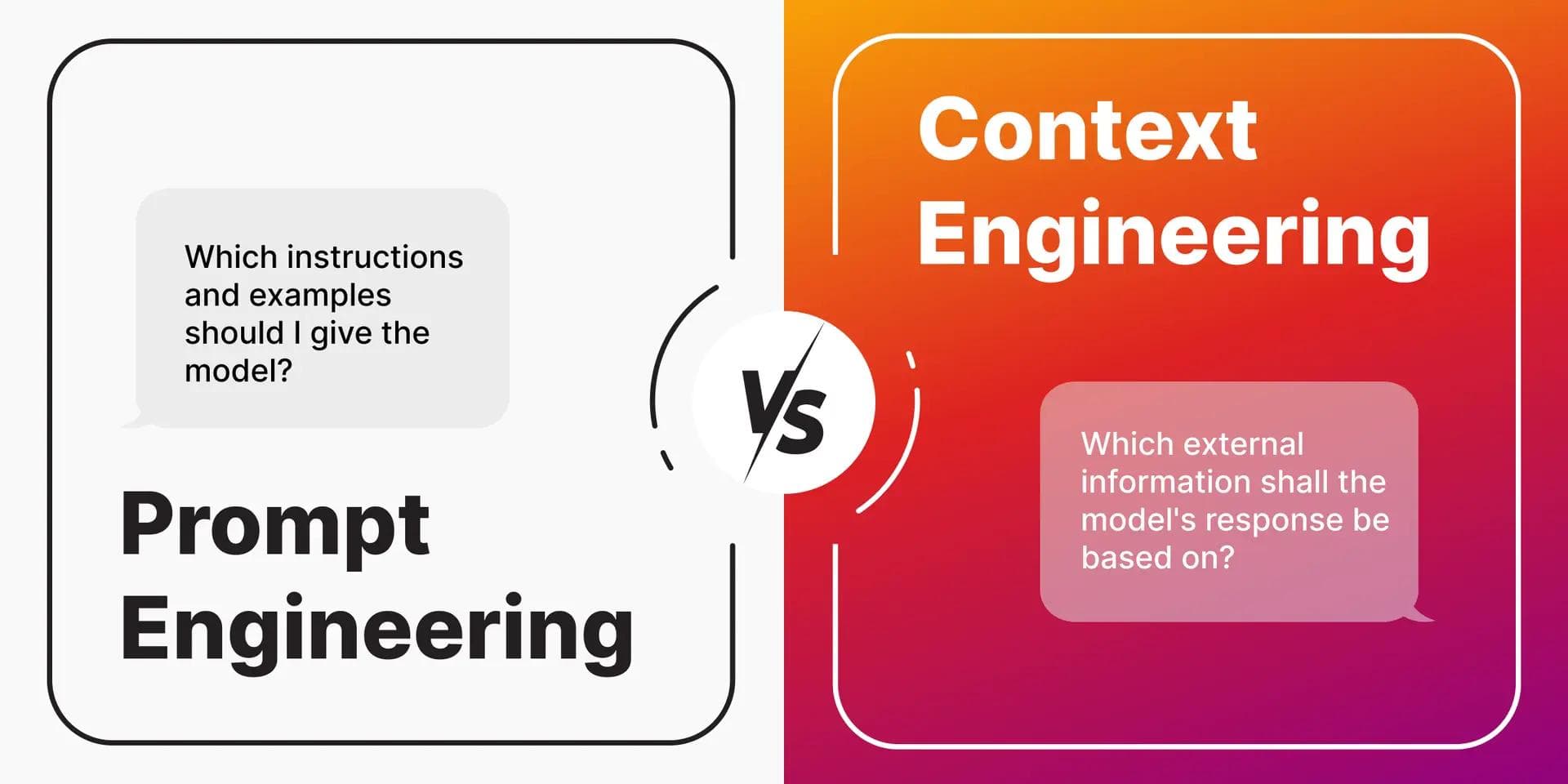
Learn what prompt engineering really is in 2025—from zero-shot basics to context engineering and RAG. A practical beginner's guide that goes beyond "magic phrases" into systems that actually work.
Learn how to use Claude Opus for free in your terminal by connecting Agent Router's free API credits to Claude Code. Step-by-step guide for Windows, macOS, and Linux.

Kimi K2.6 beat GPT-5.5 in a viral coding contest. Here is what the benchmarks, pricing, and real agent data actually say about which model wins for your workflow.

A UX audit finds what's actually breaking your product's user experience. Here's how it works, what it costs, and why Indian startups need one now.

The 6 AI sectors generating real revenue for entrepreneurs in 2026 — healthcare, fintech, e-commerce, edtech, legal, and marketing automation explained with Indian angle.
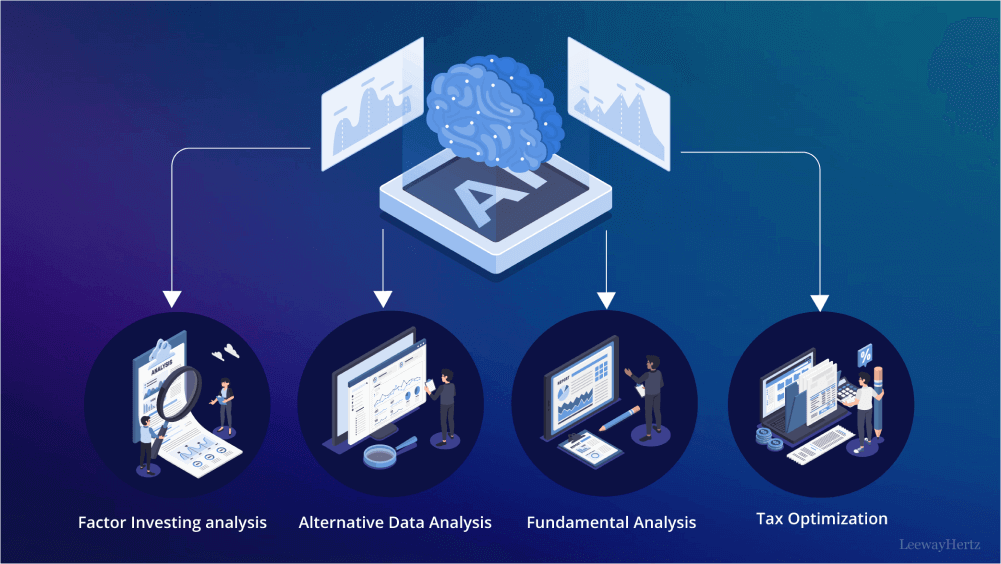
Learn how to use AI to analyze your stock portfolio in 2026 — free tools, ChatGPT prompts, and a step-by-step guide built for investors.
Get weekly curations of the best articles, resources, and insights directly to your inbox about AI, Tech, Finance & Business.