6 AI Sectors Where Entrepreneurs Are Making Real Money in 2026
The 6 AI sectors generating real revenue for entrepreneurs in 2026 — healthcare, fintech, e-commerce, edtech, legal, and marketing automation explained with Indian angle.
By Abhijit
Home
The 6 AI sectors generating real revenue for entrepreneurs in 2026 — healthcare, fintech, e-commerce, edtech, legal, and marketing automation explained with Indian angle.
By Abhijit

The most profitable AI businesses being built right now are not building chatbots. They are solving expensive, repetitive, high-stakes problems in healthcare, finance, and e-commerce — fields where deep data and costly human labor make AI the obvious, inevitable fit.
The global AI market is on track to hit $2.52 trillion in spending this year, growing at 44% year over year. But the founders capturing the biggest slice of that number are not building broad, horizontal tools. They are picking one sector, understanding its pain at a granular level, and building something too embedded in daily operations to easily replace.
If you are thinking about an AI business in 2026, your sector choice is the most consequential decision you will make. Here is where the real opportunities are — and why they work.
The landscape shifted decisively in 2025 and has not stopped shifting. Agentic AI — systems that plan and execute multi-step tasks autonomously — now powers roughly 40% of enterprise applications. Small language models (SLMs) have brought the infrastructure costs down far enough that a solo founder can deploy working AI inside a hospital clinic or regional bank without needing a Series A.
No-code and low-code platforms mean a founder with deep domain expertise but no engineering or coding background can have a working product in weeks. The question is no longer "can I build this?" It is "which problem is worth building for?"
The answer keeps pointing to the same six sectors.
Three forces converged to create this window. First, foundation models matured fast enough that the base capability is no longer the bottleneck — the bottleneck is applying that capability correctly to a specific workflow. Second, agentic frameworks made it possible to automate entire sequences of tasks, not just individual steps. Third, institutional buyers — hospitals, banks, law firms, retailers — have moved from "interested in AI" to "actively budgeting for AI," with enterprise AI adoption rising 35% in the past 18 months.
The gap between "AI is theoretically useful here" and "AI is generating measurable ROI here" has closed in these six sectors first. That is the window.
Healthcare carries the highest labor cost and the densest data of any sector on earth. Clinician burnout is a documented crisis — physicians in many health systems spend more time on documentation than on patients. AI systems trained on medical imaging data now consistently outperform human specialists in specific diagnostic tasks, including certain classes of radiology and pathology scans.
The business models are concrete. AI diagnostic tools operate in hospitals based on a per-scan basis or software-as-a-service basis. Automation systems for handling prior authorizations, discharge summaries, and referral letters cut the administrative burden in pilot programs from 25% to 40%. Integrating robots into the process improves the productivity of surgeries and physiotherapy sessions by 25% or so.
India's angle in this case is significant and fundamental. According to the World Health Organization recommendation, the doctor-to-patient ratio in India should be at least 1 to 834 patients but is not there. AI diagnostic tools for Tier 2 and Tier 3 cities can help where the current healthcare system falls short in terms of hiring more doctors. The Ayushman Bharat Digital Mission is digitizing patient records, providing the infrastructure necessary for the learning of AI diagnostic tools. Founders with clinical network access and a specific diagnostic focus — radiology, dermatology, ophthalmology — are building companies that are difficult to replicate.
Every financial transaction carries a fraud risk. This industry loses hundreds of billions in fraud worldwide each year, and this number only increases as digital payments become more common. Advanced AI systems today can simultaneously evaluate behavioral biometrics, device fingerprints, transaction patterns, and real-time signals from the network infrastructure — something no human analyzer could ever hope to achieve.
A revenue stream that depends on the value delivered ensures that the company's interests are aligned with those of its customers, making sales easier and retention easier. Robo-advisors in wealth management charge anywhere between 0.25% to 0.75% of Assets Under Management yearly — with a platform managing ₹500 crore at 0.50%, you have ₹2.5 crore in annual income.
The monthly volume of transactions via India's Unified Payments Interface system stands at over 18 billion. Payment fraud in real-time is growing fast, and the incumbents have yet to effectively address it. The founder who builds AI-based fraud detection tuned to the specific characteristics of UPI transactions has an inherent structural advantage over any US/European competitor.
When recommendation engines use browsing information, purchase data, and context cues, the resulting lift in sales is between 10% and 30%. Dynamic pricing software that constantly adjusts prices according to demand, competitor actions, and inventories can manage tens of thousands of such adjustments every day, a feat unmanageable by any human team.
The opportunity is not in serving the large players — they have already built or bought these capabilities. Mid-size e-commerce brands doing ₹10 crore to ₹200 crore in annual revenue are chronically underserved by enterprise tools that price them out and generic tools that deliver no meaningful uplift. For a vertical SaaS offering aimed at this market at ₹15,000–₹50,000 a month for each merchant, on a performance basis, there is a clear way to ₹10 crore and above in recurring income, and at high margins.
The revolution in the field of education technology between 2022 and 2024 eliminated all those solutions that were concerned merely with engagement theater, where children remained engaged without producing any results. Instead, a whole new kind of AI emerged that personalized educational solutions for each child according to their unique knowledge base and learning capacity.
Adaptive learning platforms at the K-12 level identify where a student's understanding breaks down at the concept level, not just the chapter level. Automated grading tools are saving teachers 5 to 8 hours per week. AI tutoring systems trained on curriculum-specific content serve students in subjects and languages where affordable human tutoring is structurally unavailable.
In India, this is a post-Byju's landscape. There's little trust in edtech, but the need for efficient and cost-effective educational technologies is still there. Entrepreneurs designing AI tutors that adhere to the NCERT syllabus or provide assistance in preparing for JEE, NEET, and UPSC exams are working in a space where the problem statement is huge, the potential customer base is vast, and the threshold of trust can be crossed through results.
Legal work is expensive, repetitive, and consequential — the exact combination AI is suited for. Contract review, compliance documentation, and regulatory monitoring are tasks that large firms charge ₹10,000 to ₹50,000 per hour for, and that AI tools can assist with at a fraction of that cost without sacrificing accuracy on well-scoped tasks.
Vertical SaaS tools in legal AI — built for a specific use case like vendor contract review or employment compliance — are seeing retention rates above 90% because switching costs are high and productivity gains are immediate. Indian startups building for the GST compliance, labor law, and DPDP Act segments have a domestic market with genuine urgency and no dominant incumbent.
This sector does not reward generalists. The moat comes from deep familiarity with the specific legal workflows of one industry — real estate documentation, startup funding agreements, or supply chain contracts. Breadth is a liability here.
The opportunity in marketing AI is not in generating content — basic content generation is a commodity. It is in the intelligence layer above content: which messages convert which audiences, which channels are systematically over-allocated, and which customer segments are being missed.
AI marketing tools that connect campaign performance data to customer behavior data and surface actionable allocation recommendations are generating 15% to 25% improvement in marketing efficiency for early adopters. India's D2C brand ecosystem — growing rapidly in beauty, health, fashion, and food — is still using spreadsheets and generic automation. A vertical tool targeting Indian D2C brands with language-aware capabilities and regional audience intelligence has a clear path to meaningful, defensible revenue.
Here is the pattern that keeps appearing across all six sectors: the most durable AI businesses are being built on compliance documentation, messy legacy workflows, and deeply unglamorous industry-specific problems. These are not the businesses that get written up in TechCrunch. They are what you might call "AI factories in regulated fields."
A general-purpose writing assistant competes with every other general-purpose writing assistant — and ultimately with the foundation model itself as it keeps improving. An AI compliance automation tool built specifically for SEBI-regulated investment advisors, trained on actual SEBI circulars and standard RIA workflows, has a moat. The data it ingests, the workflows it learns, the trust it builds — none of that transfers easily to a late-arriving competitor.
Horizontal tools race to the bottom on price. Vertical tools compound. The compliance moat in healthcare or finance takes 18 to 24 months to build — which is exactly why you want to start now.
Two developments are worth watching closely over the next 12 to 18 months.
First, SLM deployment at the edge. As small language models become cheap enough to run on-device or in local infrastructure, the healthcare and finance applications above become accessible to providers that today cannot afford cloud-based AI. Founders with deployable, auditable, cost-efficient models will have a significant advantage over those dependent on foundation model API pricing.
Second, regulatory tightening. India's DPDP Act and the EU's AI Act are creating compliance requirements that will raise entry barriers in exactly the sectors — healthcare, finance, legal — where the best opportunities currently exist. For founders already inside those sectors, this is a competitive moat being built by government on their behalf. The window to get established before compliance requirements become onerous is narrowing faster than most people realize.
AI startups with the most potential in 2026 will not be the ones that have developed the most sophisticated technology. Rather, they will be the ones that have identified an industry, understood the ins and outs of the industry and developed something so ingrained into their day-to-day that switching out for anything else becomes harder than spending the money. Pick vertical. Pick regulated. Pick the sector where the data is messy, the incumbents are slow, and the switching costs compound over time. That is where the durable businesses are being built.
Subscribe to The Gridpulse Brief.
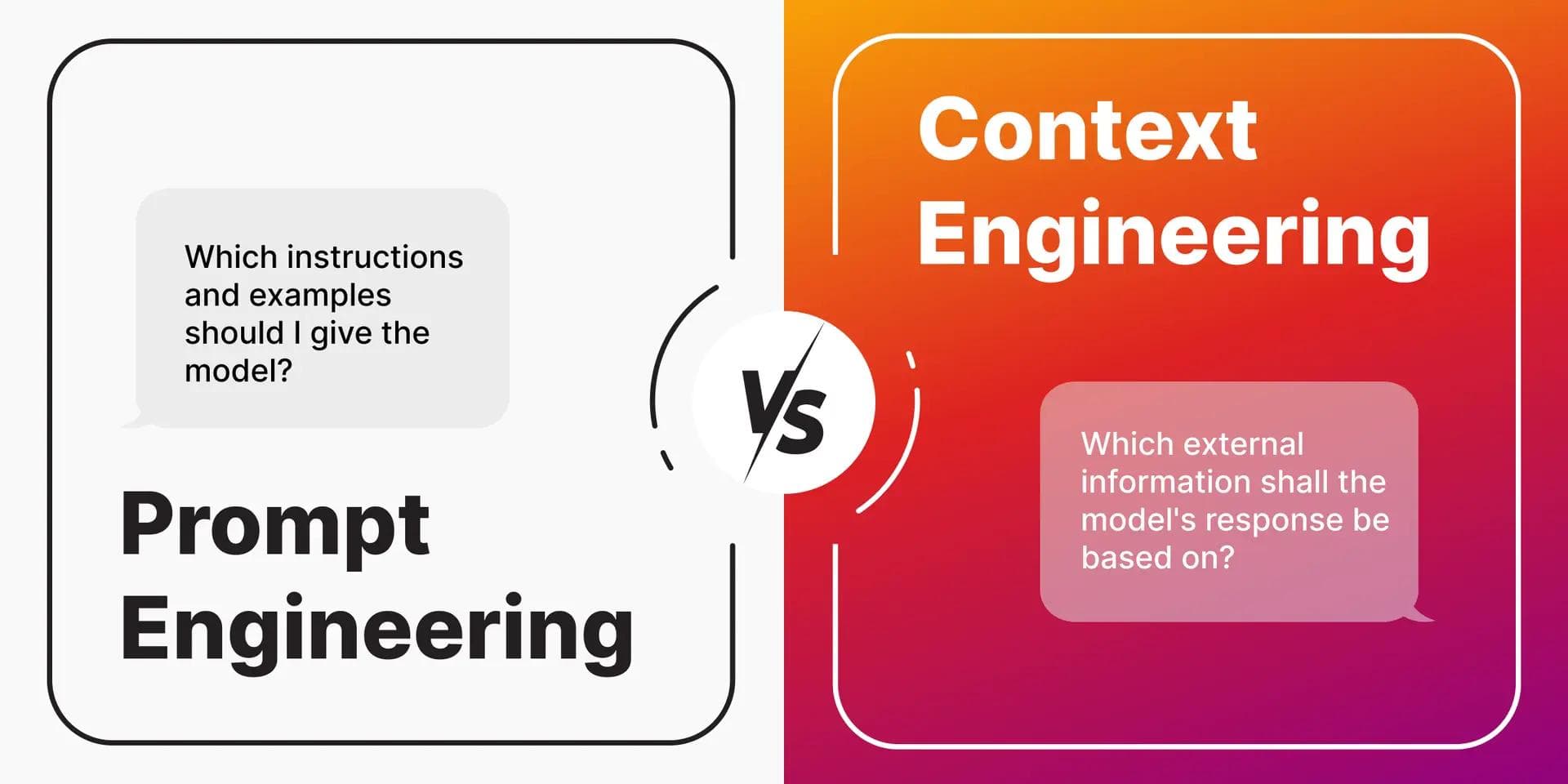
Learn what prompt engineering really is in 2025—from zero-shot basics to context engineering and RAG. A practical beginner's guide that goes beyond "magic phrases" into systems that actually work.

Vibe coded your app but can't make money from it? Add these 5 reliability layers — auth, errors, state, deploy, tests — before your first paying customer arrives.
Learn how to use Claude Opus for free in your terminal by connecting Agent Router's free API credits to Claude Code. Step-by-step guide for Windows, macOS, and Linux.

Kimi K2.6 beat GPT-5.5 in a viral coding contest. Here is what the benchmarks, pricing, and real agent data actually say about which model wins for your workflow.

A UX audit finds what's actually breaking your product's user experience. Here's how it works, what it costs, and why Indian startups need one now.
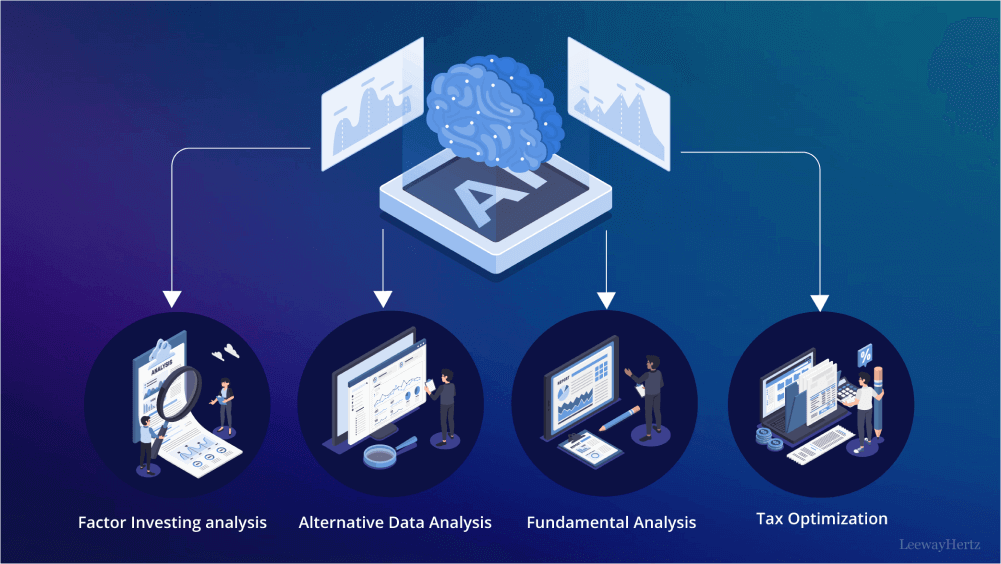
Learn how to use AI to analyze your stock portfolio in 2026 — free tools, ChatGPT prompts, and a step-by-step guide built for investors.
Get weekly curations of the best articles, resources, and insights directly to your inbox about AI, Tech, Finance & Business.