Rockstar India QA Staff Allege GTA 6 Crunch in Glassdoor Review
A Glassdoor review from Rockstar's Bengaluru QA team alleges 3 AM crunch and compressed timelines ahead of GTA 6's November 19, 2026 release date. Here's what it means.
By Abhijit
Home
A Glassdoor review from Rockstar's Bengaluru QA team alleges 3 AM crunch and compressed timelines ahead of GTA 6's November 19, 2026 release date. Here's what it means.
By Abhijit
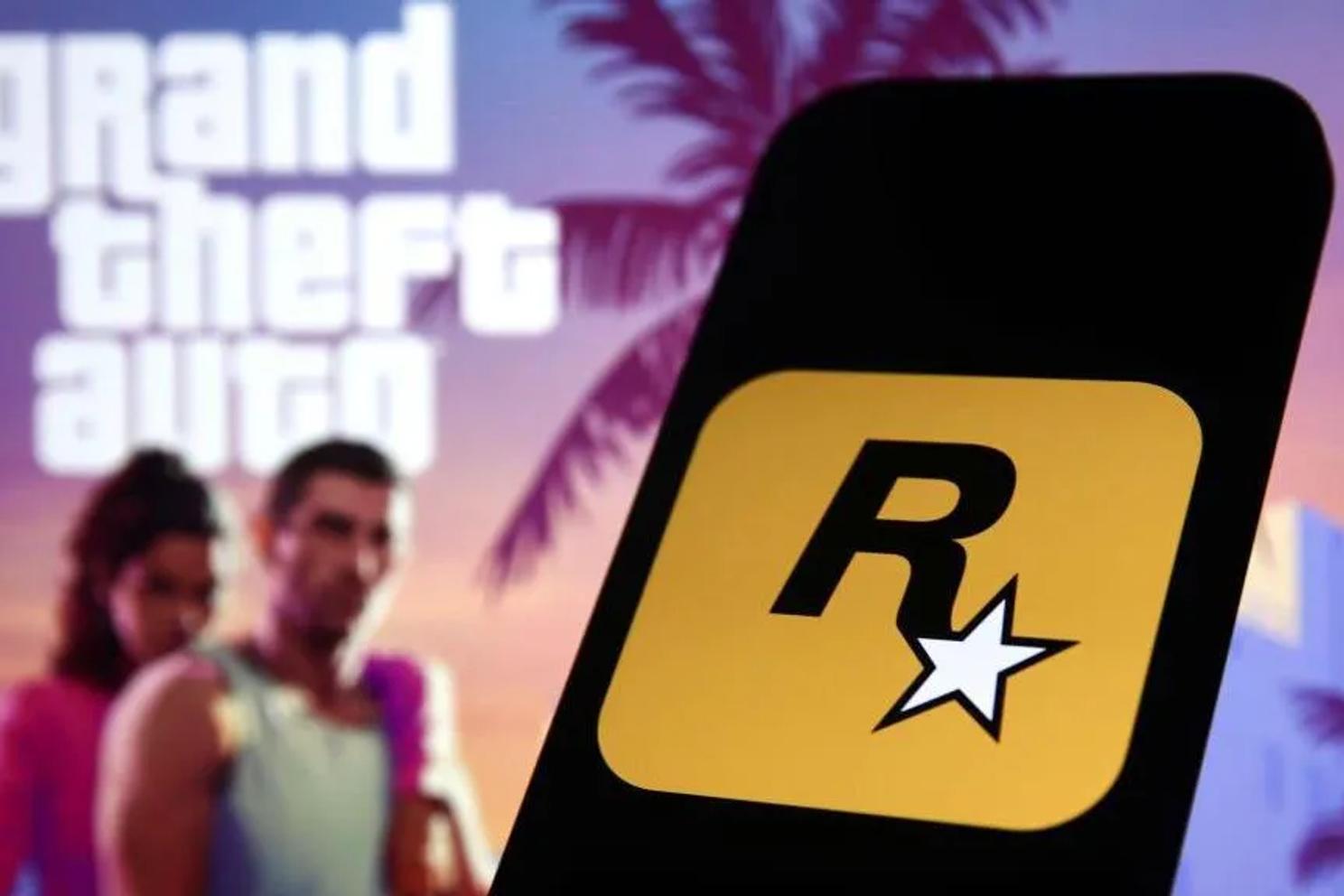
A Glassdoor review posted on May 1, 2026 by a self-described current QA analyst at Rockstar's Bengaluru studio is going viral — and it paints a grim picture of what it costs to keep GTA 6 on track for its November 19, 2026 release.
The reviewer described schedules as "hectic" since April, with tasks that would normally take 5 to 6 months being compressed into 2 to 3. Work reportedly stretches until 3 AM. The mental health toll is called out explicitly. The review was amplified by GTA 6 Countdown, one of the most-followed X accounts tracking the game's development, which pushed it in front of hundreds of thousands of fans and observers in hours.
GTA 6 is not just a game release. It is the single biggest bet in Take-Two Interactive's portfolio, and possibly the most commercially anticipated entertainment product of 2026. With under 200 days left until the November deadline, any credible signal about development strain — verified or not — affects three very different groups at once: fans watching for delay signs, investors watching for revenue risk, and an industry watching whether Rockstar's post-RDR2 promises about worker conditions were real or performative.
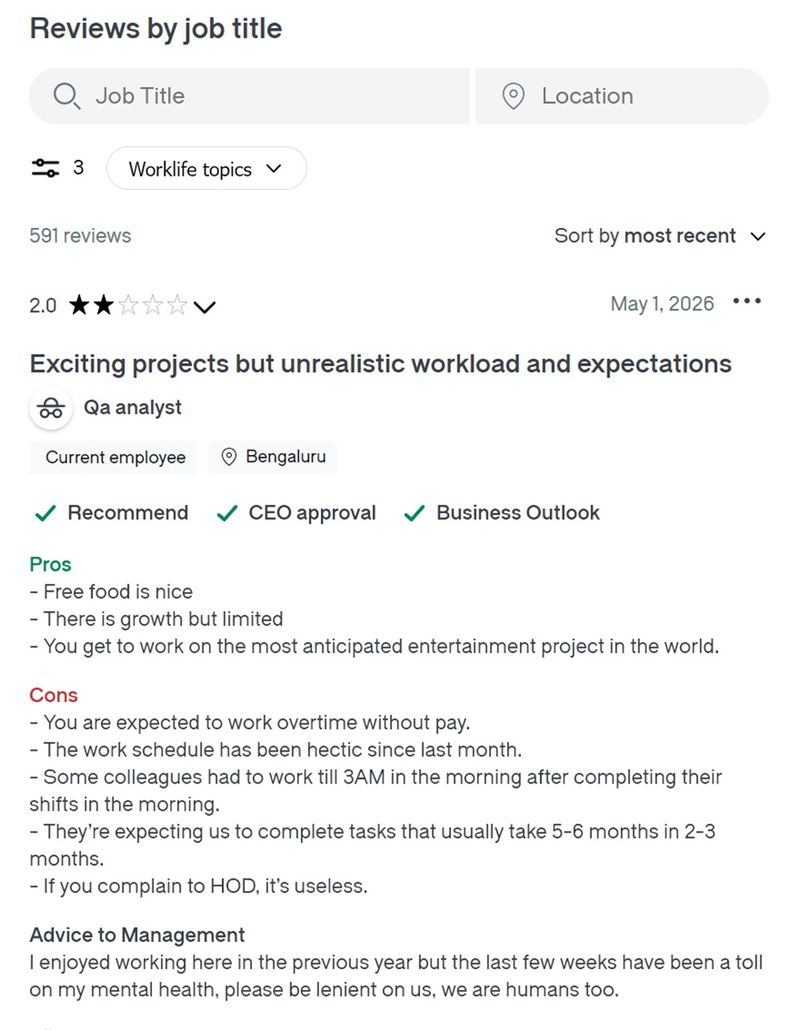
The anonymous review, posted the morning of May 1, 2026, described conditions in the Bengaluru QA team that have intensified sharply over the past month. The specific detail about timelines being squeezed from 5 to 6 months down to 2 to 3 months suggests the studio is in a hard compression phase — pushing quality assurance faster than planned to protect the release date.
GTA 6 has already slipped twice. The original target was Fall 2025. It moved to May 26, 2026. Then it moved again to November 19, 2026. Take-Two reaffirmed the November date in February 2026 and has tied its marketing calendar to a summer 2026 campaign launch. A third delay at this stage would be more than a PR problem — it would signal a development crisis.
Rockstar has not issued any official response to the review. The company has historically maintained that overtime is optional for employees. The Glassdoor post offers no way to verify its claims independently, and anonymous reviews are easy to write in either direction.
Crunch is not new at Rockstar. During Red Dead Redemption 2's final stretch, co-founder Dan Houser confirmed 100-hour work weeks in a 2018 interview — a statement that became a flashpoint for the industry's labour conversation. Rockstar walked it back and pledged reforms. But anonymous review patterns on Glassdoor at Rockstar India have continued to flag recurring overtime complaints, mixed with praise for perks and compensation.
AAA game development follows a predictable arc. The 6 to 12 months before a major release — often called the certification sprint — see crunch spike at almost every major studio, even ones with formal anti-crunch policies. The policies tend to govern normal development cycles. The final push, particularly for a title under this much commercial pressure, tends to override them.
The Bengaluru studio specifically handles QA and testing for Rockstar's major titles. That work is unglamorous and often invisible — playing the same sequences hundreds of times to find edge-case bugs — but it is the last real firewall before a game ships. Rockstar India's recent job listings have signalled a late-stage bug hunt is active, which aligns with where a November 2026 release should be in the production calendar right now.
Here is the part that most coverage will miss. Rockstar's Bengaluru operation is a cost-efficiency play by global standards. A QA analyst in India earns a fraction of what an equivalent role pays in the US or UK, while doing work that directly feeds into a product targeting $1 billion in opening-week revenue. When that analyst posts a 3 AM Glassdoor review about compressed timelines, the resentment embedded in that post is not just about the hours. It is about the structural mismatch — global hype, global revenue, Indian salaries, Indian crunch.
This is a pattern across AAA gaming's offshore quality infrastructure. Studios get cost efficiency, fans get a polished product, and the people doing the testing in Bengaluru, Hyderabad, or Manila absorb the pressure at the tail end of the production cycle. The anonymity of Glassdoor is often the only channel available to surface these conditions.
For Indian developers and QA professionals considering roles at major gaming studios, this review will register. It joins a growing body of similar feedback that suggests crunch at Rockstar India is structural, not exceptional.
Prediction markets currently give the November 2026 release date 77 to 80 per cent odds of holding. That confidence is built on Take-Two's financial incentives — holiday revenue, retailer commitments, marketing spend already in motion. The Glassdoor review does not change those odds meaningfully on its own. But it does confirm that someone, somewhere in the chain, is absorbing the cost of keeping them intact.
The number to watch is May 21, 2026 — Take-Two's next earnings call. Management commentary on GTA 6's development status will either reinforce the November date or introduce the kind of hedging language that precedes a slip. If Rockstar faces sustained public pressure over the Bengaluru review before that date, expect a prepared statement on employee conditions.
Also watch whether more reviews surface. A single anonymous Glassdoor post is easy to dismiss. A pattern across multiple employees and time periods is harder to ignore.
One anonymous review cannot confirm whether Rockstar is in crisis or simply in a normal final push. What it does confirm is that someone working QA on GTA 6 in Bengaluru felt strongly enough about their conditions to put it in writing publicly. That matters — both as a data point about this specific launch and as a reminder of how offshore labour in AAA gaming absorbs pressure that never shows up in the press releases.
If you follow gaming, tech, and the business stories behind both, The Gridpulse Brief covers exactly this kind of intersection.
The Gridpulse Brief lands in your inbox every Sunday morning — five stories across AI, Tech, Finance, Business, and Science, already read, already analysed, already explained. No algorithm. No noise. Just the week's most important developments and exactly what they mean for you.
Free forever. One click to unsubscribe anytime.
Subscribe to The Gridpulse Brief.
Learn what prompt engineering really is in 2025—from zero-shot basics to context engineering and RAG. A practical beginner's guide that goes beyond "magic phrases" into systems that actually work.
Vibe coded your app but can't make money from it? Add these 5 reliability layers — auth, errors, state, deploy, tests — before your first paying customer arrives.
Learn how to use Claude Opus for free in your terminal by connecting Agent Router's free API credits to Claude Code. Step-by-step guide for Windows, macOS, and Linux.
Kimi K2.6 beat GPT-5.5 in a viral coding contest. Here is what the benchmarks, pricing, and real agent data actually say about which model wins for your workflow.

A UX audit finds what's actually breaking your product's user experience. Here's how it works, what it costs, and why Indian startups need one now.

The 6 AI sectors generating real revenue for entrepreneurs in 2026 — healthcare, fintech, e-commerce, edtech, legal, and marketing automation explained with Indian angle.
Get weekly curations of the best articles, resources, and insights directly to your inbox about AI, Tech, Finance & Business.