Spirit Airlines Is Dead: What Killed Budget Flying and What Comes Next
Spirit Airlines shut down all operations on May 2, 2026, after a $500M bailout failed. Here's what killed budget flying and what higher fares mean for you.
By Abhijit
Home
Spirit Airlines shut down all operations on May 2, 2026, after a $500M bailout failed. Here's what killed budget flying and what higher fares mean for you.
By Abhijit
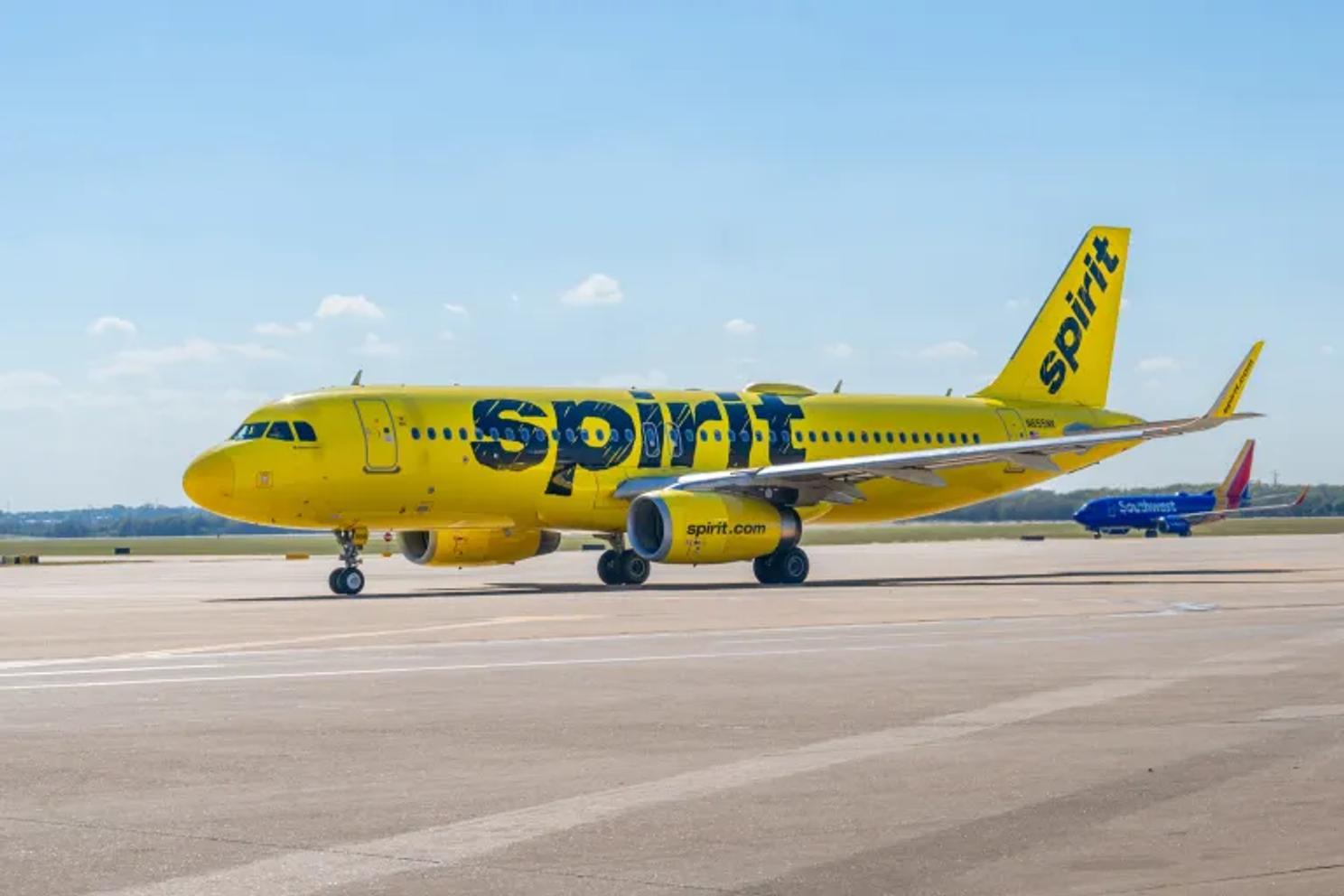
Spirit Airlines shut down all flights on May 2, 2026, cancelling every ticket, grounding every plane, and ending 34 years of operations — all after a last-ditch $500 million government bailout request failed.
This is not just one airline going out of business. Spirit carried 1.7 million passengers as recently as February 2026. Its collapse removes a significant chunk of low-cost capacity from the US market overnight. For anyone who has ever booked a $39 fare from New York to Miami, that era is over. Fares are already moving higher — and this story is directly relevant to how you think about travel costs, budget airline stocks, and what the death of an ultra-low-cost model means for the industry that remains.
Spirit Airlines filed for bankruptcy in late 2024 — its first — after accumulating over $2.5 billion in pandemic-era losses and watching a planned merger with JetBlue get blocked by US regulators in 2023. The merger would have given Spirit a lifeline. Without it, the carrier was left holding a debt pile it could not service.
CEO Ted Christie, who had led the airline since 2019, resigned in April 2025 as the company attempted a post-bankruptcy restructuring. Creditors took ownership through a debt-to-equity swap, pushing out existing shareholders. Interim leadership tried to pivot the model — adding more legroom, softening the ultra-bare-bones approach — but the finances never stabilised.
A second bankruptcy followed in 2025. By early 2026, rising fuel costs and a brutal fare environment for budget carriers had made the situation unrecoverable. In February 2026 alone, Spirit cancelled over 250 flights — roughly 8% of its monthly schedule. Passenger numbers had fallen to half of pre-crisis levels.
The final blow came in May 2026 when talks with the Trump administration for a $500 million federal bailout collapsed. Within days, Spirit wound down every operation. Approximately 17,000 employees lost their jobs. The stock, trading under the ticker SAVEQ, now sits at $0.47 — a penny stock for an airline that once flew 30 million passengers a year.
Spirit was not killed by a single moment. It was killed by a business model that had no shock absorbers.
The ultra-low-cost carrier model works on razor-thin margins in stable conditions. Spirit made its money not on base fares but on fees — for bags, seat selection, printing a boarding pass at the airport. In 2019, that worked. When the pandemic hit, it collapsed almost immediately, because demand disappeared and the fee revenue vanished with it.
The JetBlue merger, blocked by the Department of Justice on competition grounds, was Spirit's best available escape route. JetBlue had premium passengers, loyalty revenue, and a stronger balance sheet. The combination would have created a carrier that was neither pure budget nor pure premium — but something viable. Regulators said no, and that decision effectively sealed Spirit's fate.
Rising oil prices in 2026 finished the job. Fuel is typically 25–30% of an airline's operating costs. When prices spike, full-service carriers absorb the hit with business class revenue and loyalty programmes. Spirit had neither. Every oil spike hit its cost structure directly, with nothing on the revenue side to compensate.
Here is what most coverage of Spirit's collapse misses: this is not just a story about one badly-run airline. It is a signal that the pure ultra-low-cost model — no frills, maximum fees, maximum load factor — has structural limits that become fatal under stress.
The carriers that are surviving and growing are hybrid models. Southwest built loyalty into budget flying. IndiGo in India built reliability into budget flying. Frontier, which tried to merge with Spirit in 2022 before that deal also collapsed, is now well-positioned to absorb Spirit's routes — but Frontier itself has been adding amenities and moving away from the absolute bare-minimum model that Spirit represented.
The personal take here: Spirit's end signals the twilight of pure ultra-low-cost flying in the US market, and that has real downstream consequences. Fewer budget seats means less price competition, which means fares on popular routes will rise. A 10–20% increase on short-haul US domestic routes in the next 12 months is not an unreasonable projection.
The Indian angle matters here. IndiGo, SpiceJet, and Akasa Air all operate in a market where margins are similarly thin and the budget model similarly exposed to fuel price volatility. SpiceJet in particular has faced debt restructuring struggles and fleet groundings that rhyme directly with Spirit's arc. Indian aviation investors and anyone watching the Indian budget carrier space should read Spirit's collapse as a case study, not a distant American story. The mechanics of failure — debt overhang, blocked mergers, fuel sensitivity, no revenue buffer — are not unique to the US.
For passengers with unused Spirit tickets: there are no refunds coming directly from Spirit. Your best option is to dispute the charge with your credit card provider immediately. Rebook through Frontier, Southwest, or American for affected routes.
Watch Frontier. The airline is the most likely acquirer of Spirit's landing slots, routes, and possibly some aircraft. If Frontier moves quickly on Spirit's assets, it could emerge significantly stronger — and more competition in budget flying could partially offset the fare increases that Spirit's exit would otherwise cause.
Watch the DOT and DOJ response. The same regulators who blocked the JetBlue-Spirit merger on competition grounds now preside over a market with one fewer budget carrier and fewer low-cost seats. That is a tension worth watching. If Spirit's collapse prompts a rethink of how regulators approach airline consolidation, it could reshape merger prospects across the industry for years.
Watch fuel prices. If oil stabilises or falls through the second half of 2026, the pressure on surviving budget carriers eases. If it stays elevated, Frontier and others face the same structural squeeze that killed Spirit.
Spirit Airlines' shutdown on May 2, 2026 ends an era of dirt-cheap fares built on fees and forced trade-offs. The airline was not killed by safety failures or bad service alone — it was killed by a business model with no resilience, a blocked merger that would have saved it, and a debt load that rising fuel costs made impossible to carry. Budget travel in the US just got meaningfully more expensive. The only question now is how much, and how quickly the market adjusts.
If you found this breakdown useful, there is more where this came from.
The Gridpulse Brief lands in your inbox every Sunday morning — five stories across AI, Tech, Finance, Business, and Science, already read, already analysed, already explained. No algorithm. No noise. Just the week's most important developments and exactly what they mean for you.
Free forever. One click to unsubscribe anytime.
Subscribe to The Gridpulse Brief

Learn what prompt engineering really is in 2025—from zero-shot basics to context engineering and RAG. A practical beginner's guide that goes beyond "magic phrases" into systems that actually work.

Vibe coded your app but can't make money from it? Add these 5 reliability layers — auth, errors, state, deploy, tests — before your first paying customer arrives.

Learn how to use Claude Opus for free in your terminal by connecting Agent Router's free API credits to Claude Code. Step-by-step guide for Windows, macOS, and Linux.

Kimi K2.6 beat GPT-5.5 in a viral coding contest. Here is what the benchmarks, pricing, and real agent data actually say about which model wins for your workflow.

A UX audit finds what's actually breaking your product's user experience. Here's how it works, what it costs, and why Indian startups need one now.

The 6 AI sectors generating real revenue for entrepreneurs in 2026 — healthcare, fintech, e-commerce, edtech, legal, and marketing automation explained with Indian angle.
Get weekly curations of the best articles, resources, and insights directly to your inbox about AI, Tech, Finance & Business.